Ah, spring and early summer…. a time of regrowth, renewal – and of Mallard babies!
First, ‘the boys’ come – 3 or 4 Drakes with their iridescent green heads, puffed out chests and flapping wings, vying for female attention. ‘The girls” are a little more circumspect, not entirely won over by all the strutting and quacking as they start their reconnaissance mission to last year’s nest site.
But one thing’s for sure; the minute the dock is re-anchored for the summer, our winged friends lay claim to it, leaving us humans on shore on ‘swab-the-deck’ duty!
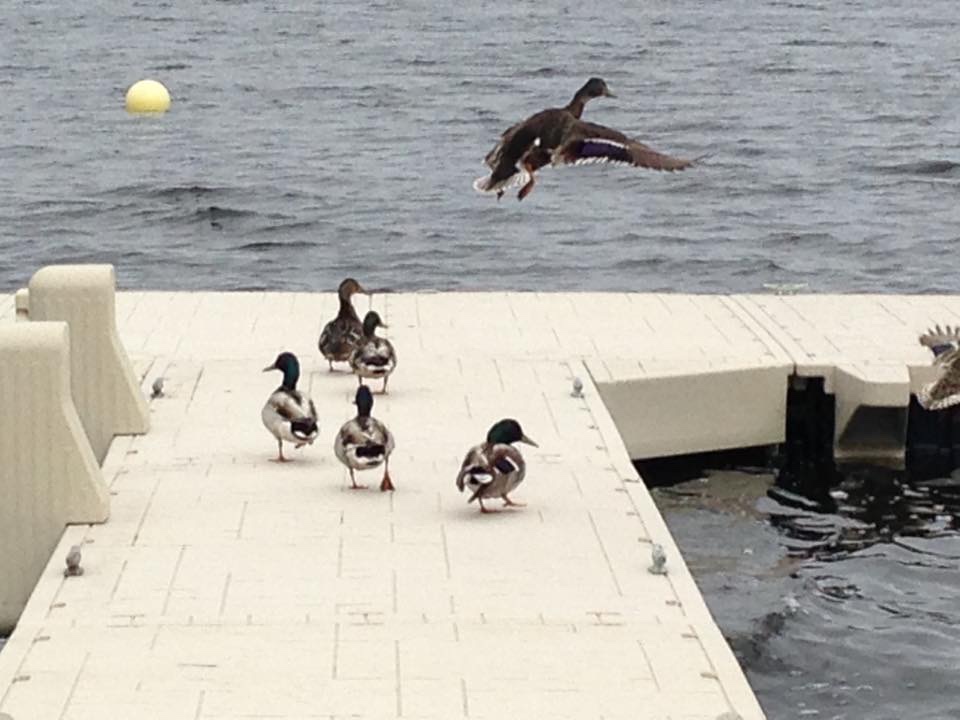
And so, I start my annual pilgrimage to the shoreline each morning with a cup of cracked corn in my hand. I have one boy-duck who sees me and starts swimming my way as soon as I arrive. The others seem a bit more wary. I scatter the corn and back off, giving them their space. I am rewarded with the sound of contented, murmuring quacks as they forage among the beach stones, and resist the urge to break up the fights as the mallards and the widgeons chase each other away from the food.
Mallard fun facts:
They are omnivores; they eat seeds, fish, insects and eggs
They shed their flying feathers and grow new ones twice a year – during that time, they cannot fly
Female ducks lay 10 eggs; days after they hatch, mama leads the ducklings away from the nest, never to return. At 2 months, they can fly. Born in May-June, they migrate south in the early fall, but return back to the same place each year to mate for themselves.
After breakfast is served, the drakes waddle along the beach for the rest of the day and bob on the waves, now and then tipping their back ends to the sky, like weebles, as they feed on the young grass under the water. And so it goes for the first 3 or 4 weeks, until THEY appear :).
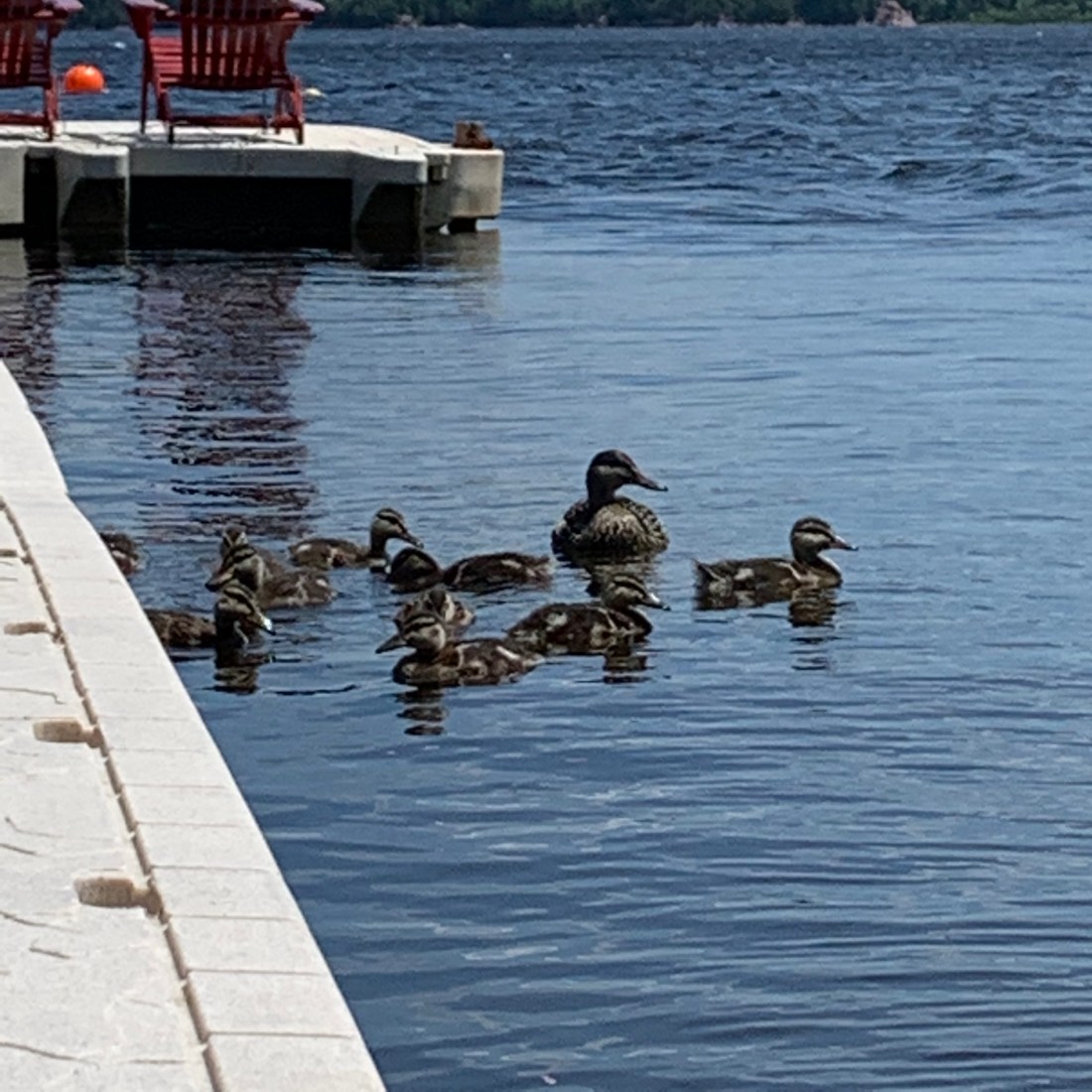
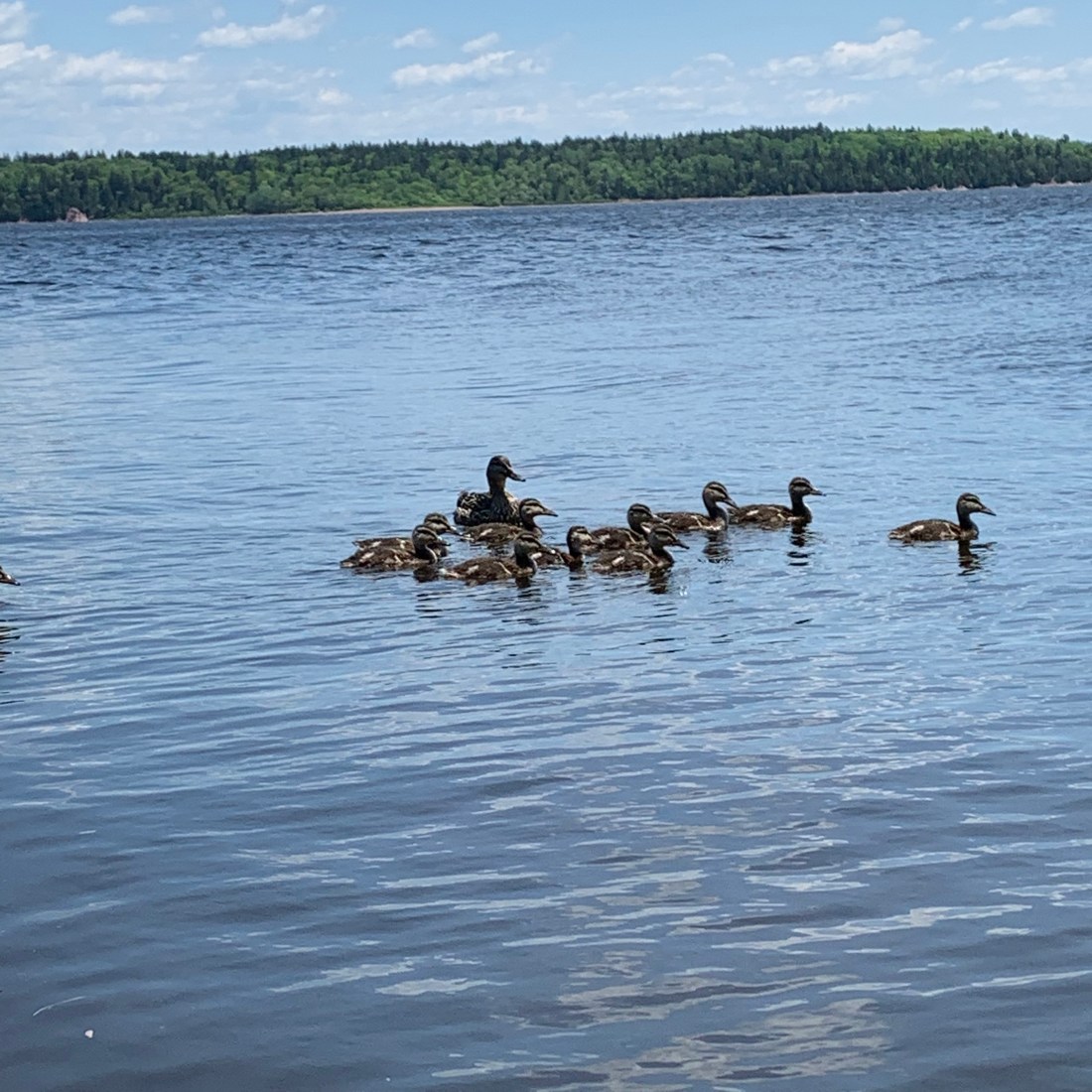
It’s Duckling Day! Mama emerges from her nest in the shoreline bushes with her little brood; 11 fuzzy little yellow balls of baby-quacks and nubby winglets, scurrying across the water to keep up with their mother as she gathers them around her for their first outing. They stay relatively far off shore and out of reach, but 2 weeks later, having doubled in size (seen in this picture), Mama lets them come in for the feast I have laid out.
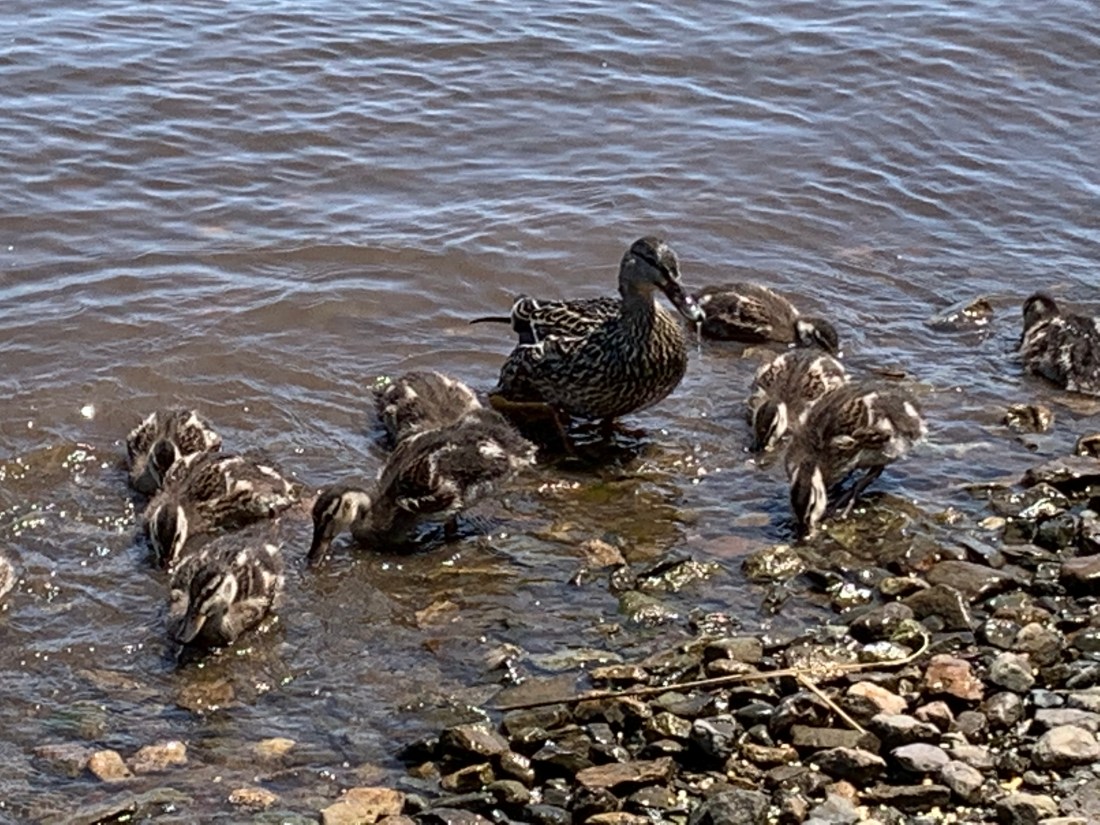
Everyday I am at the cottage, I do a head count. The 11 wee ones have become my charges. They need a human champion- someone besides mama who will keep watch.
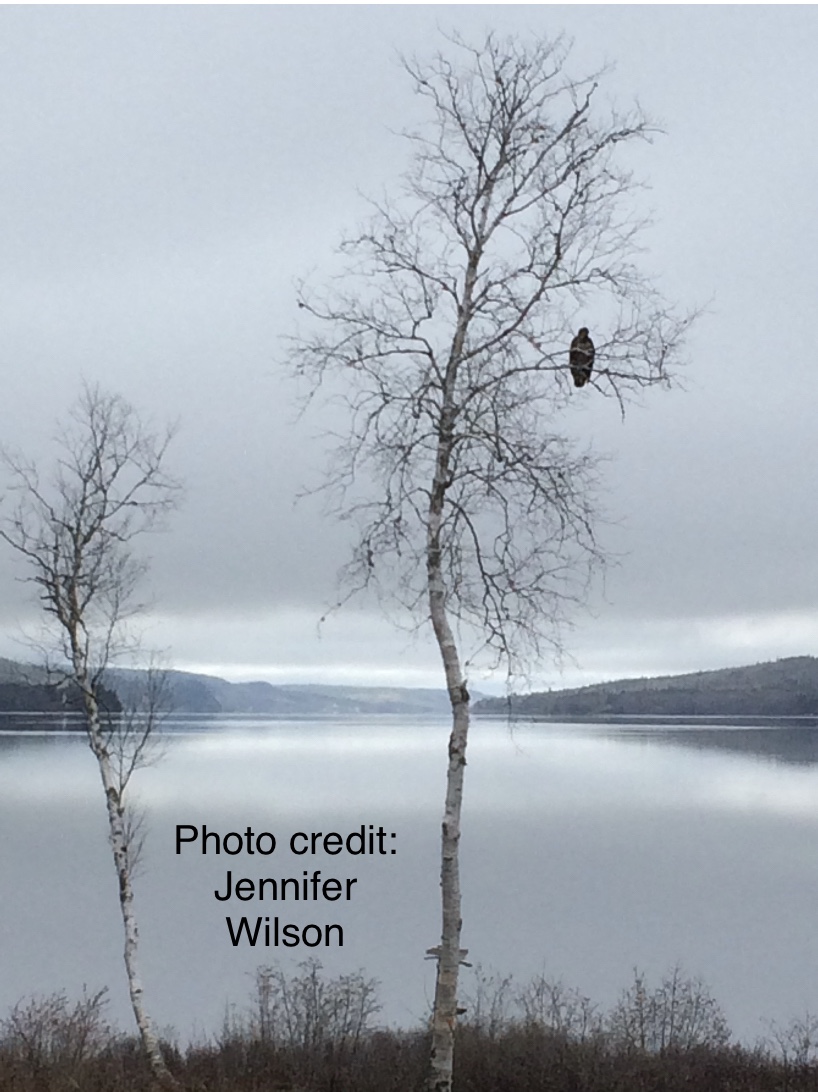
Bald eagles are beautiful, but they are a constant worry for a mother duck. Weighing between 6-18 pounds, these strong, fast and efficient hunters can have a wingspan of over 6 feet. A thriving population on the Kingston Peninsula, they soar high above the river or roost in the tops of tall trees, patiently waiting for the opportunity to snatch an unsuspecting victim with their fist-sized talons.
Sunday evening, while we were having dinner and enjoying the idyllic scene as the babies splashed and played in the leeward side of the dock, a huge eagle streaked from the trees at the water’s edge, talons extended, ready to pluck an innocent babe from the happy scene below. With a few dishes flying and some startled shrieks from the human companions on shore, the raptor’s mission was aborted and the count remains, thankfully, at 11. For now.

 High Water Cottage