July 2, 2019
After the flood of 2018 and the near-repeat performance of 2019, we were left weighing our options of what to do with our waterfront home. To my mind, the Kennebecasis River is the rightful owner of the riverbank, and we are but guests along her beautiful shore. So, what to do? Stay or go?
To go was never in our minds, really. For 355 days of the year, it is a lovely, carefree place to be. It’s just those ten days of watching, waiting (and manning the pumps).
We have a gravel cellar, so we always get ground water and we expect and handle it with a sump pit, a 1/2 HP submersible pump and a few hand pumps. But in 2018 the rapid rise of the water caused the river to spill over the top of our foundation, overwhelming any ability we had to keep up. Unfortunately, at the time, our electrical (and propane generator) panels were in the cellar and it became necessary to call NB Power to shut off electricity at the source. With no pumps to handle the inflow, the cellar filled to within 5″ of breaching into the main level. One more high tide or wind and we would have been dealing with major damage. 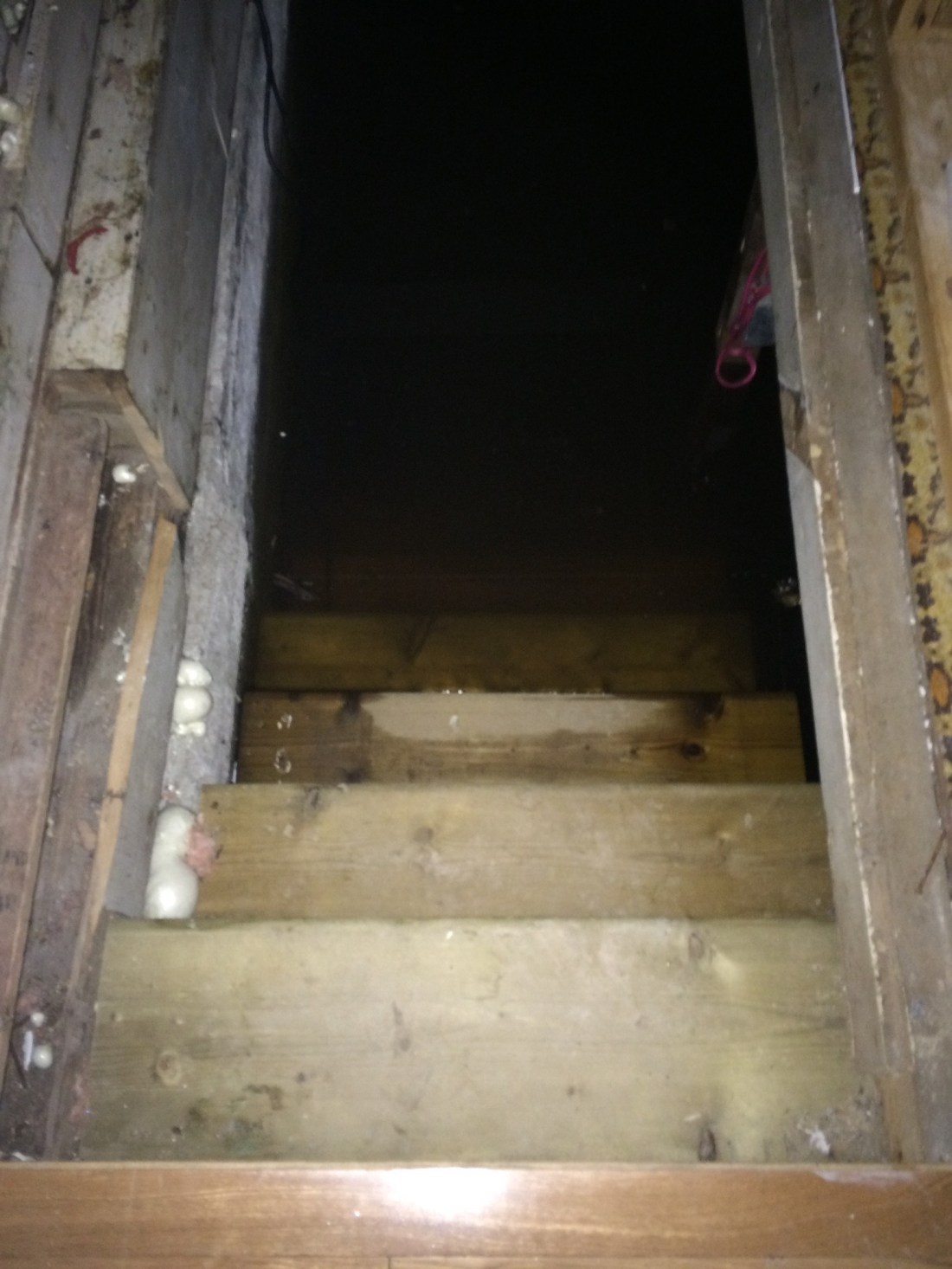
Here it is on its way up; all that black is water 😦
When the EMO came to visit the day after the crest, we entered the house for the first time. You could hear the waves sloshing against the floor joists, and the house was gently swaying – a rather disconcerting feeling. Our friends’ lab pinned her ears back and would not enter the house. Needless to say, we were very very lucky and spent all last summer repairing damage outside and reinstalling new electrical/generator panels, along with water tanks up in the main level. We installed two additional sump pits and now had a total of 3, half-horsepower pumps that can pump a combined 600 gallons a minute from our cellar.
This spring, water again surrounded the house, and the wave action was worse, tearing siding off the front of the cottage. Despite that, the pumps did their job and the cellar only had 2″ of water. But hydrostatic pressure is a major issue and the foundation walls were under enormous strain from the ground outside (although, remarkably, they held).
So, as the water receded, we discussed options. On the advice of a consulting environmental engineer, we could a) stay with what we had done and deal with water each year, hoping this was not the trend (the engineer feels that we are seeing the new normal) b) build a berm around the house as our friends on our shore had done, which was particularly effective for them (they are further from the water and therefore have more room for displacement) or c) the most costly, but likely most effective option for us – to raise the house.
And so, last week, our project began. The contracts were signed, the permits obtained and the work started.
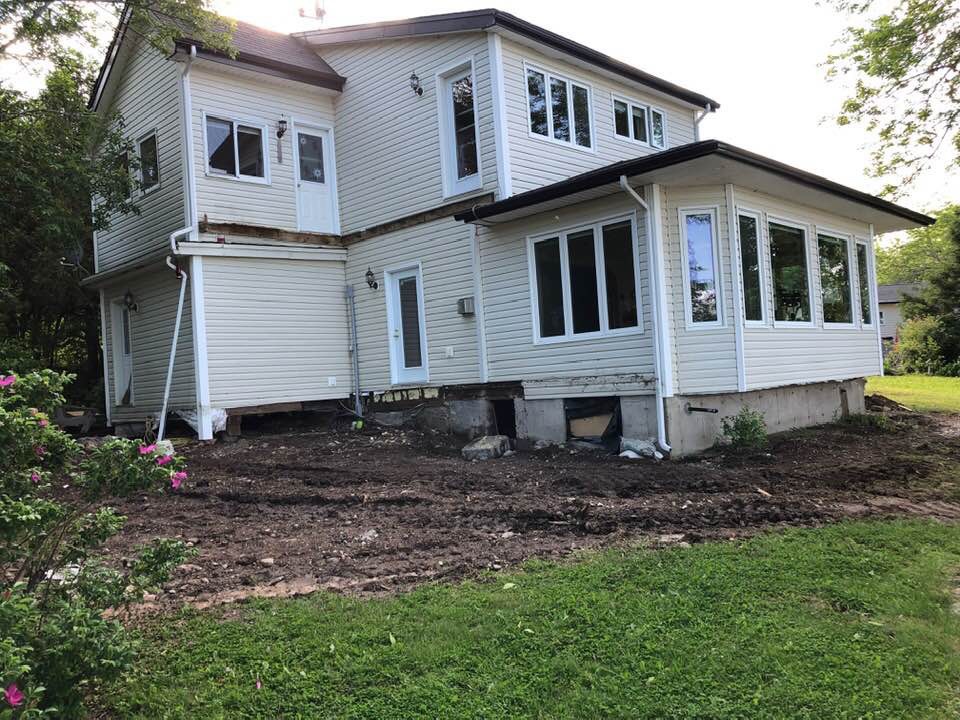
Under the watchful eye of our project manager (who I may later feature with his permission😉) the deck at the side of the house was removed, including a large second story patio. All of the mature plantings along our existing foundation were dug up (kudos to the hard work of dear husband). The excavator arrived to dig around the foundation and create space where holes would be cut in the cement, through which steel beams will rest during the lifting process. 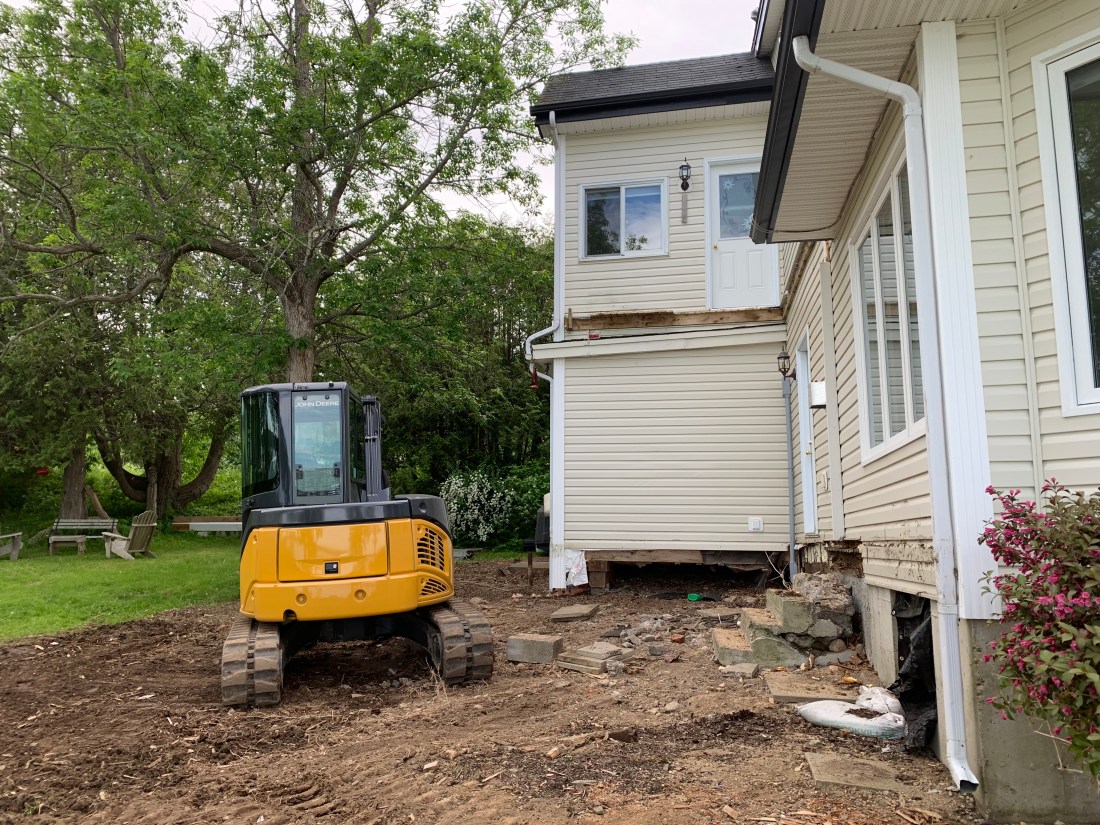
Some of the digging had to be done by hand, some of it in pouring rain (I should have made cookies for the crew!)
Today, the water and propane will be disconnected. Depending on the amount of slack we have in the poles/wires, the electricity may or may not be disconnected as well.
And so, we are well underway. The plan is to:
1. Elevate – the company uses a computerized hydraulic jack system to slowly elevate the house five feet, after which the existing foundation will be augmented with cement and steel rebar. Finally, the foundation/cellar will be back filled with dirt/gravel and the three internal sump pits will be reinstalled in the crawl space beneath, before the house is lowered back down onto its new base.
2. Create a berm/raised flower bed to encircle the sides and front of the house, about 6-8 feet wide with a sloped armour stone front (to protect from wave action) with an exterior sump pit installed in the wall.
3. And finally, my favourite part – the new verandah/deck. Larger, higher, on ‘bigfoot’ foundations that will wrap around to the back (because our back door, currently flush with the ground, will be 6 feet up in the air). Landscaping will be our fall project.
So, as you can imagine, a big project, but a rather interesting one. For anyone thinking of doing this, stay tuned to my blog and feel free to reach out privately for specific information re contractors, costs, lessons learned etc 😉. For now, I’ll post occasionally as things are happening. Nothing like a little summer gardening project to fill your days!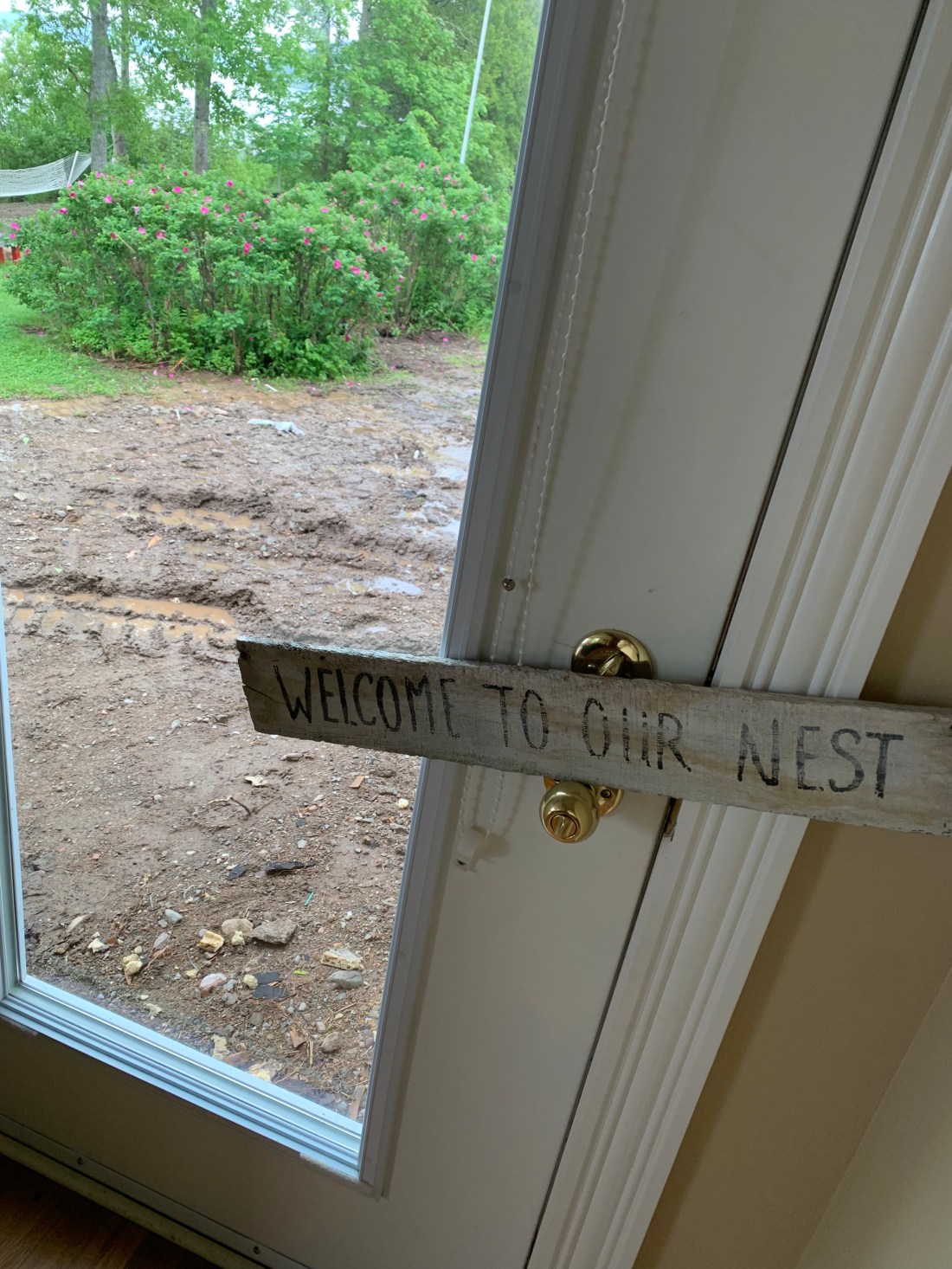

 High Water Cottage
Good Luck
LikeLike